The Blue Carbon Revolution: How Applied Oceanography is Fighting Climate Change
The Blue Carbon Revolution: How Applied Oceanography is Fighting Climate Change

https://img.jagranjosh.com/imported/images/E/Articles/Blue-Carbon-img.jpg
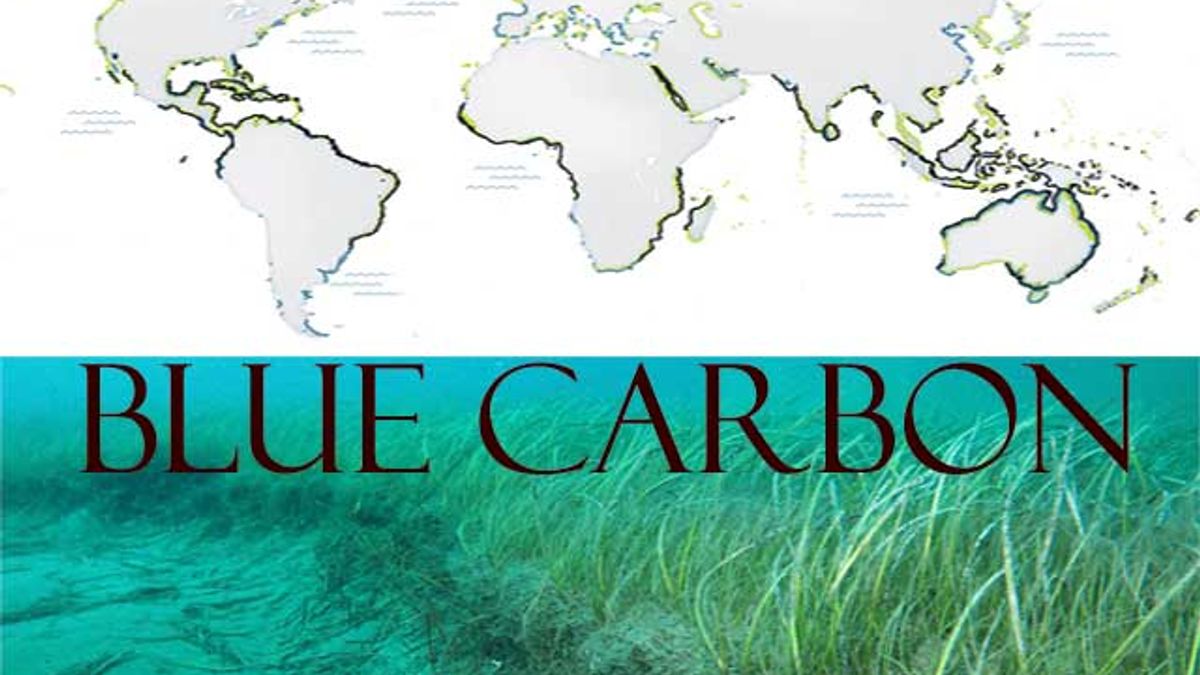
In the fight against climate change, scientists and policymakers are looking beyond forests and terrestrial ecosystems for carbon storage solutions. One of the most promising frontiers is the ocean—specifically, "blue carbon" ecosystems such as mangroves, seagrasses, and salt marshes. These natural habitats not only support biodiversity but also act as powerful carbon sinks, absorbing and storing atmospheric carbon dioxide (CO₂) more efficiently than most land-based ecosystems. Applied oceanography is playing a crucial role in understanding, managing, and enhancing these blue carbon systems, turning the ocean into an ally in our climate battle.
The Science Behind Blue Carbon
Oceans cover over 70% of the Earth's surface, making them the largest active carbon sink. However, traditional carbon sequestration discussions have primarily focused on forests. Blue carbon ecosystems, found along coastlines and shallow waters, are unique because they store carbon not just in their biomass but also in deep sediments, where it can remain trapped for thousands of years.

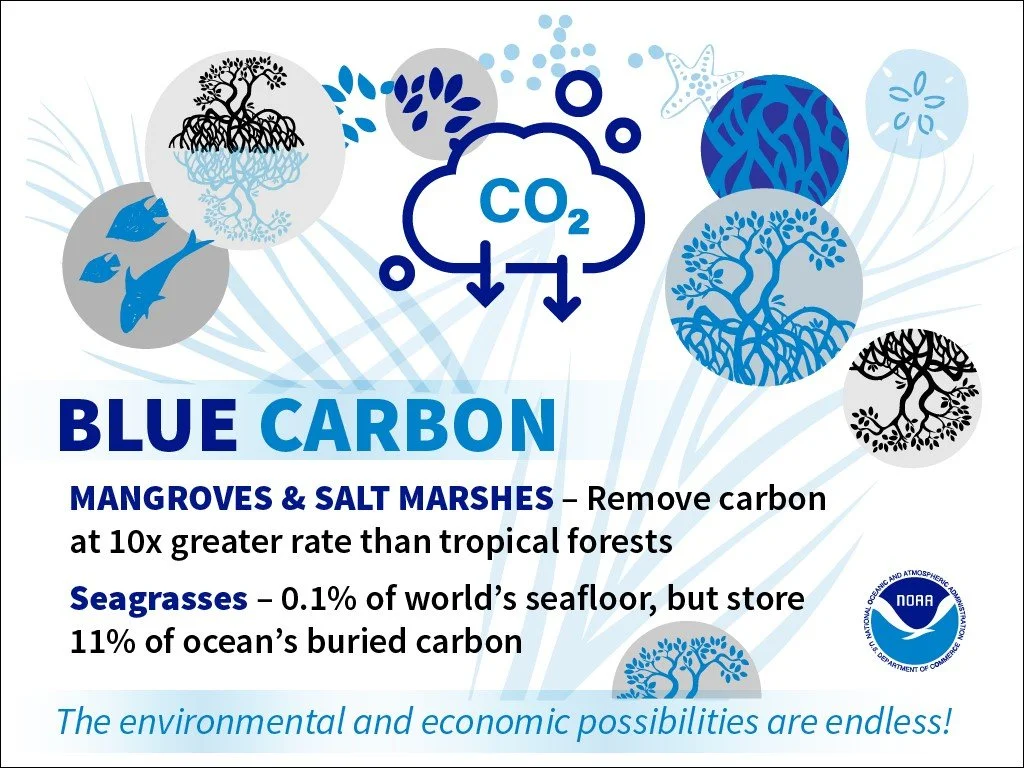
Mangroves: These coastal forests act as natural shields against erosion and storm surges while trapping carbon-rich sediments beneath their roots.
Seagrasses: Found in shallow waters, they capture carbon through photosynthesis and store it in ocean sediments.
Salt Marshes: These wetlands slow down water movement, allowing organic material and carbon to accumulate in the soil.
According to research, blue carbon habitats can sequester carbon at rates up to 10 times faster than terrestrial forests and store it for much longer. However, these ecosystems are rapidly declining due to human activities like coastal development, pollution, and climate change.
Applied Oceanography: A Solution-Oriented Approach
Oceanographers and climate scientists are using applied oceanography to map, restore, and enhance blue carbon ecosystems. Some of the leading approaches include:
1. Remote Sensing and GIS for Mapping Blue Carbon
Satellite imagery and GIS (Geographic Information Systems) allow researchers to map and monitor blue carbon ecosystems with high accuracy. By tracking changes in vegetation, water quality, and sediment buildup, scientists can assess the health of these ecosystems and identify areas for conservation.
2. Carbon Credit Markets for Blue Carbon Conservation
Nations and corporations are investing in blue carbon projects as part of their climate mitigation strategies. Governments are integrating blue carbon into their Nationally Determined Contributions (NDCs) under the Paris Agreement, while companies are funding mangrove restoration to offset their carbon footprints.
3. Bioengineering for Seagrass and Mangrove Restoration
Marine ecologists are experimenting with bioengineering techniques to enhance the growth and resilience of blue carbon habitats. For example, planting "super seagrass"—genetically resilient strains that can survive in changing ocean conditions—is being explored as a way to boost carbon sequestration.
4. Artificial Reefs to Support Carbon Storage
Coral reefs and oyster reefs also play a role in carbon sequestration. Some scientists are using biodegradable structures as artificial reefs to promote marine biodiversity while simultaneously trapping carbon-rich sediments.
Why It Matters for Humanity
Beyond their carbon sequestration benefits, blue carbon ecosystems provide crucial services for human societies:
Coastal Protection: Mangroves and salt marshes act as natural buffers against rising sea levels, storm surges, and coastal erosion—protecting millions of people in vulnerable coastal regions.
Livelihoods and Fisheries: Seagrass meadows and mangrove forests support thriving fisheries, providing food security and income to coastal communities.
Oxygen Production and Water Filtration: These habitats improve water quality by filtering pollutants and releasing oxygen, contributing to healthier marine environments.
Indian Context: A Coastal Nation at Risk and Opportunity
India, with its 7,500 km coastline, is particularly vulnerable to climate change. Rising sea levels, frequent cyclones, and coastal erosion threaten millions of lives, from Mumbai’s high-rises to the small fishing villages of Tamil Nadu. However, India is also home to some of the world’s most crucial blue carbon ecosystems, including:
Sundarbans Mangrove Forest: The world’s largest mangrove ecosystem, shared with Bangladesh, acts as a natural buffer against cyclones.
Gulf of Mannar Seagrass Beds: One of India’s richest marine biodiversity hotspots, these seagrass meadows support fisheries and store massive amounts of carbon.
Chilika Lake, Odisha: This saltwater lagoon’s marshes help mitigate flooding and serve as a global model for wetland conservation.
India is already leading the way in blue carbon conservation. Initiatives like ‘Mangrove for the Future’ and restoration projects in Maharashtra, Odisha, and Gujarat are ensuring that these ecosystems thrive. Additionally, India’s National Adaptation Fund for Climate Change (NAFCC) is funding projects that integrate blue carbon into climate policy.
However, threats remain. Unchecked coastal development, pollution, and illegal deforestation are still causing widespread damage. Strengthening legislation, enforcement, and community participation will be critical in preserving India’s blue carbon resources.
India, with its vast coastline and rich marine biodiversity, has an opportunity to be a global leader in blue carbon conservation. The tide is turning, and with oceanography leading the way, the ocean might just be our greatest hope.
The Call to Action-
While research has provided us with innovative tools and solutions, the preservation of blue carbon ecosystems requires collective action. Governments must integrate ocean-based carbon sequestration into climate policies, industries should invest in sustainable ocean management, and individuals can support conservation efforts by reducing pollution and advocating for marine protection.
The ocean is not just a vast, mysterious entity—it is a living, breathing system that holds the key to our climate future. By harnessing the power of blue carbon, applied oceanography is not only advancing scientific knowledge but also creating a more sustainable and resilient world for future generations.
In this evolving era of climate solutions, the ocean is no longer just a victim of environmental change—it is becoming a crucial part of the cure.


Wow well informative
ReplyDelete